
01
Lead Intake (CRM)
Capture & qualify inbound and outbound leads, with pipeline and follow-ups.
When no SaaS could run a custom-packaging operation end to end, we didn't buy them software — we built them their operating system: a 9-stage pipeline, an integration hub, a client portal, and an AI support desk, in one platform.
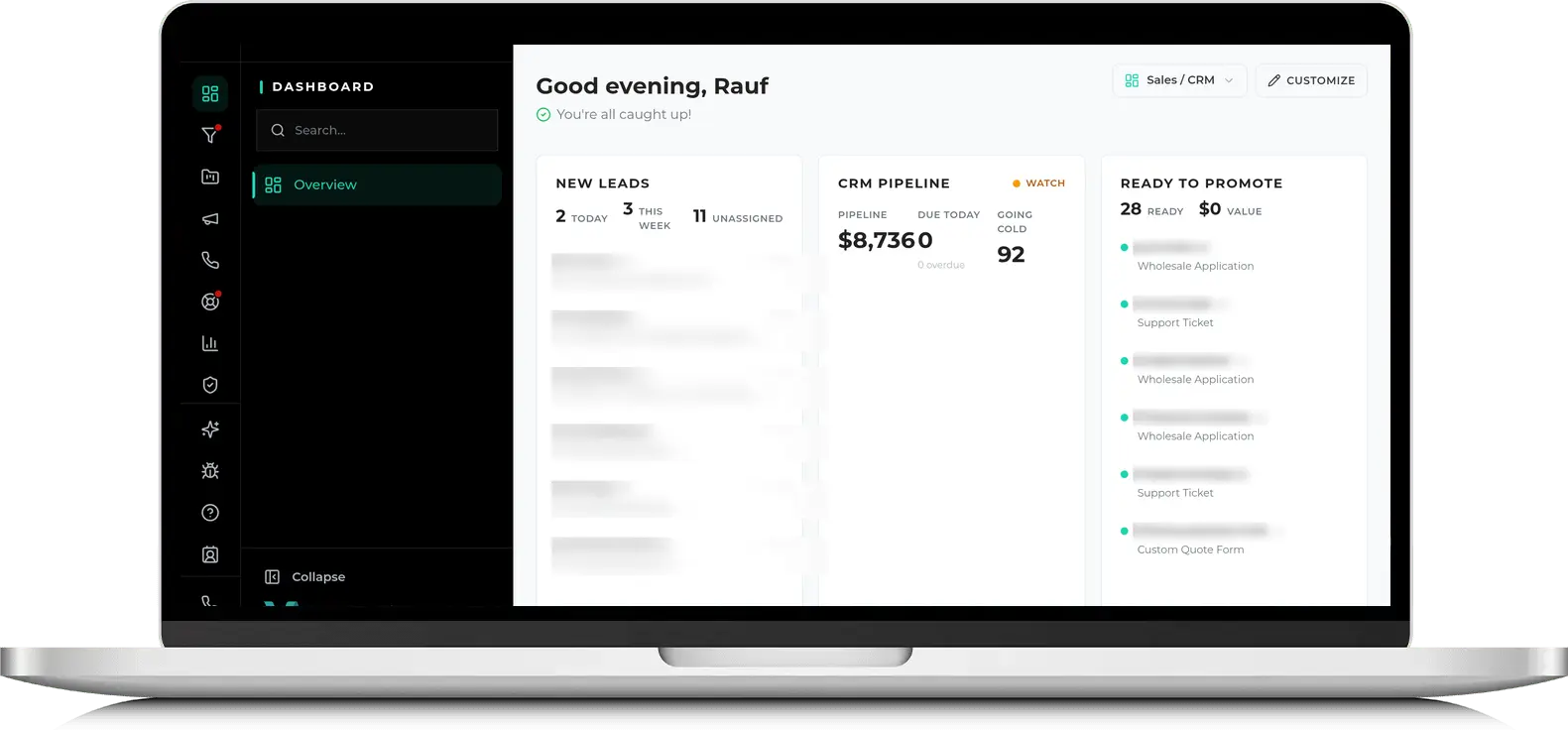
Hammont — a custom-packaging company serving wholesale, B2C, and vendor relationships — ran on a fragmented stack: spreadsheets for leads, quotes, and tracking; a separate help desk for support; and finance, operations, and shipping data sitting in systems that didn't talk to each other.
The team manually bridged those gaps on every order, which produced conflicting updates, reporting errors, and re-keyed data. And customers had zero visibility — no way to see where an order was in production or shipping.
The business had outgrown every tool it could rent. So we built WRAPT: one platform that models the entire operation and becomes the single front face the team and clients actually use.
WRAPT models the business as a strict pipeline with handoff gates — nothing advances until its predecessor is satisfied. Every action is tracked, every decision logged, every dollar traceable.
Capture & qualify inbound and outbound leads, with pipeline and follow-ups.
Define the spec — size, type, dimensions, finish, quantity.
Vendor sourcing and cost gathering.
Estimates built straight from sourcing data.
Track physical sample requests and approvals.
Lock artwork, deposit, and item numbers.
Vendor POs and production tracking.
Ocean freight and shipment coordination.
Final invoicing, payment, and delivery.
Omnichannel support hub running alongside every stage.
WRAPT doesn't re-implement everything — it orchestrates Hammont's specialist systems and is the single face the team and clients use. The single-flow principle: every data type flows in exactly one defined direction, and no system writes to another except through WRAPT.
That's what ended the conflicting updates and reporting errors of the old disconnected stack — and a built-in integration-health view keeps every connection observable.
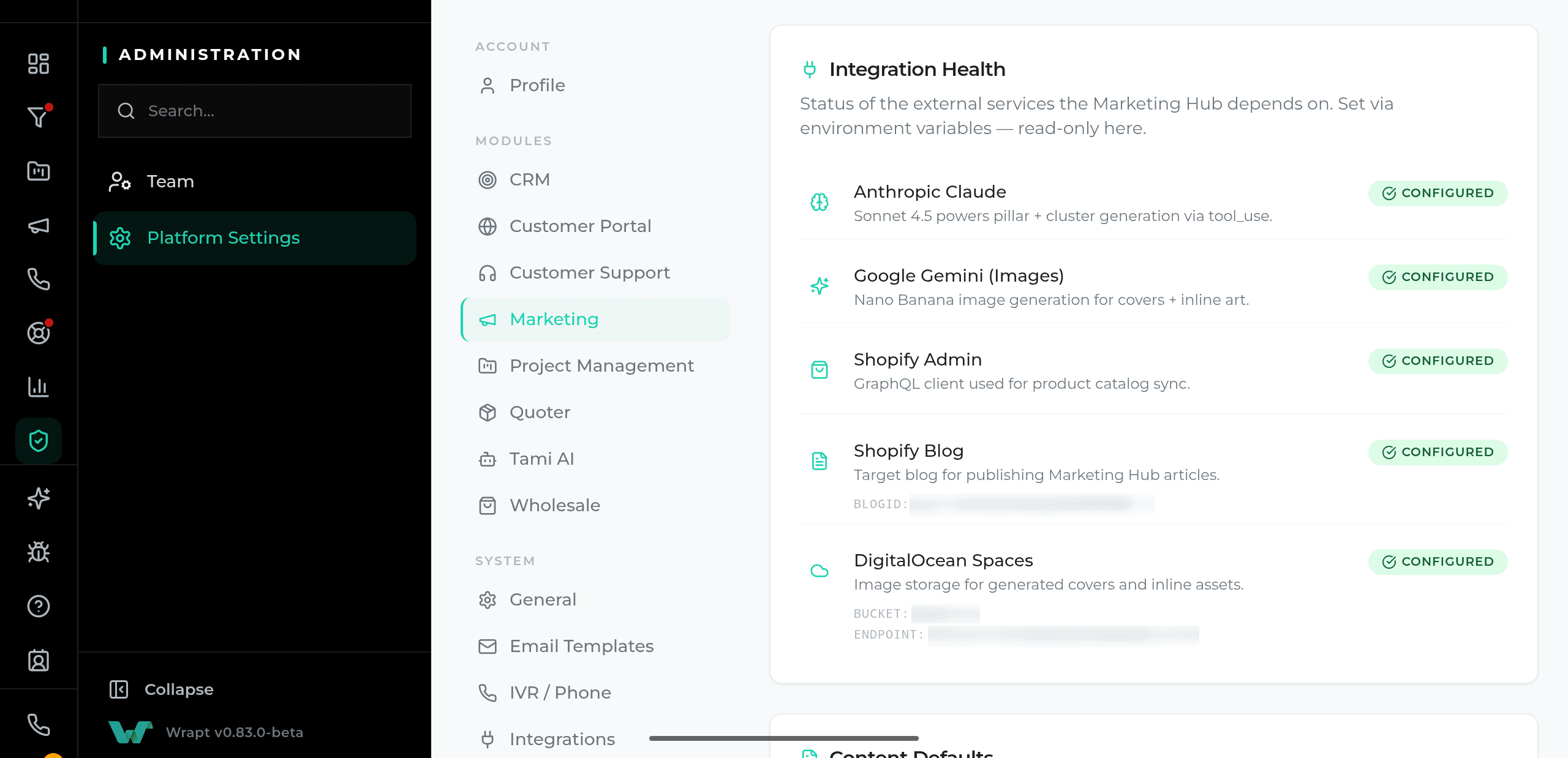
The standout pieces — the CRM overhaul, the command center, the AI support hub, and the marketing engine — all in one owned platform.
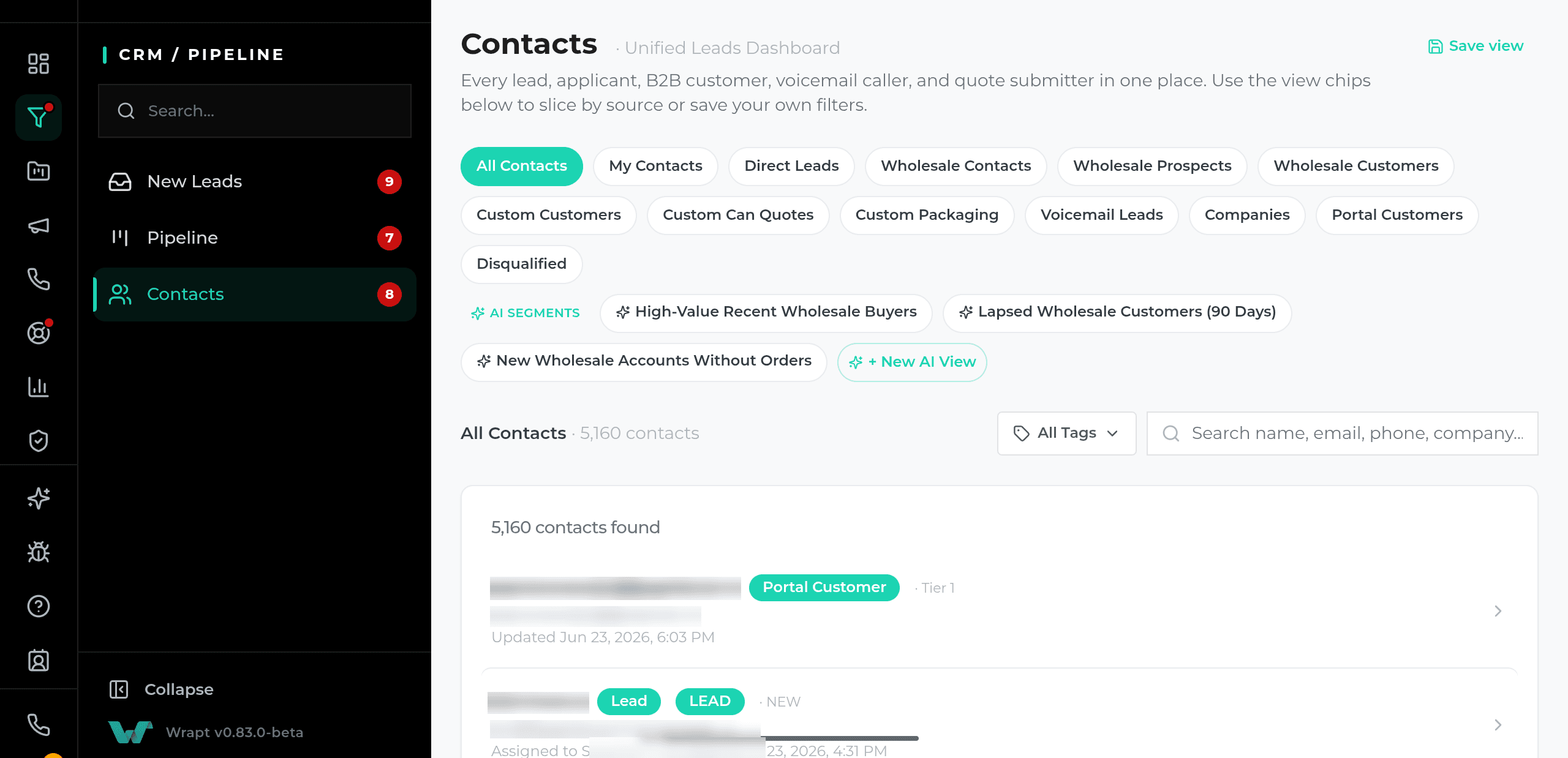
The original kanban hid what mattered — with 100+ leads, a card three days from its due date looked the same as one three months out. We made a power-user table the default, with computed urgency (overdue / warning / normal) so sales triages the right lead first.
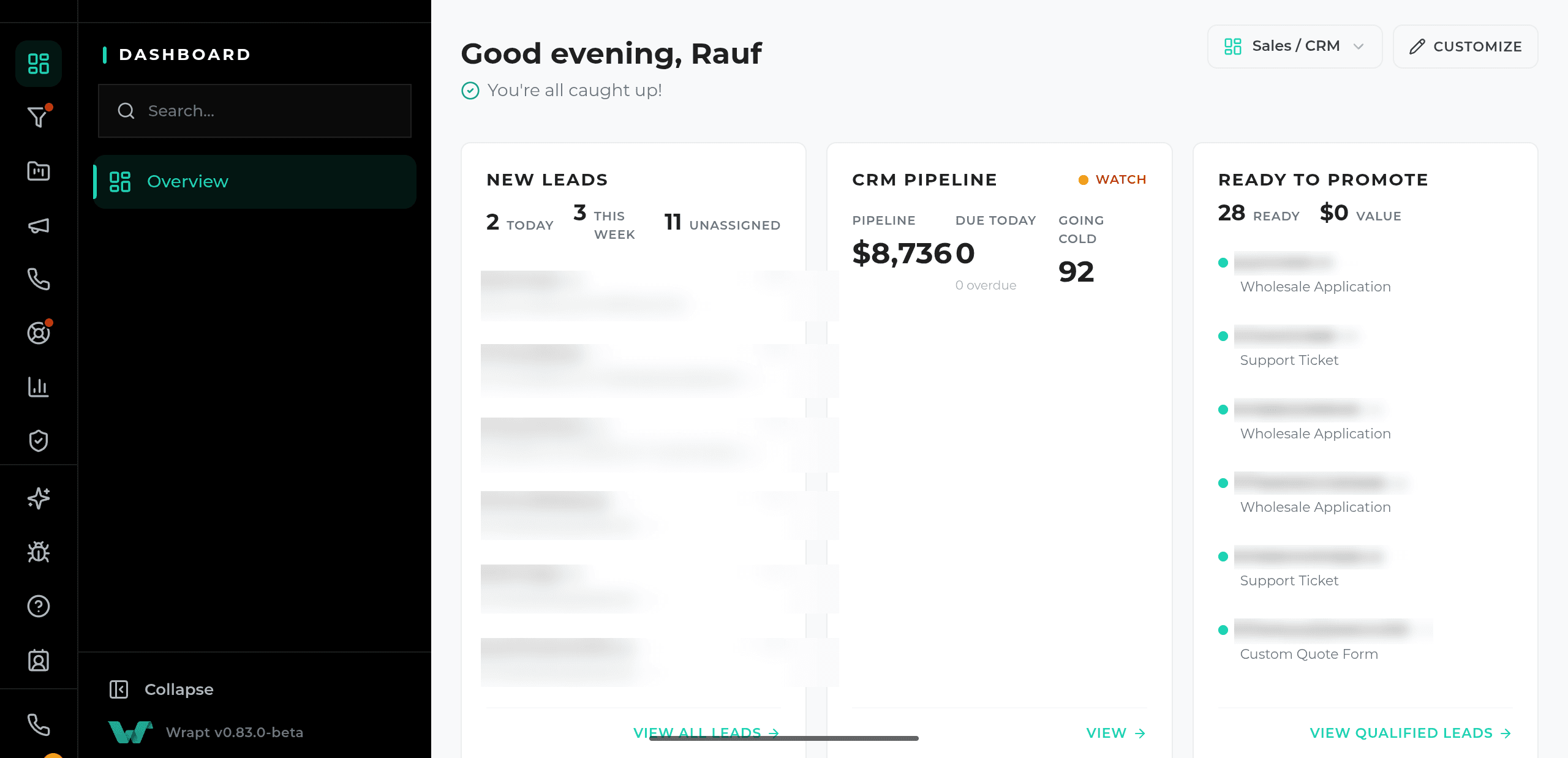
Owners and PMs open WRAPT to new leads, live pipeline value, and what's ready to promote to the next stage — the orchestration layer the team actually works in, instead of stitching three systems together by hand.
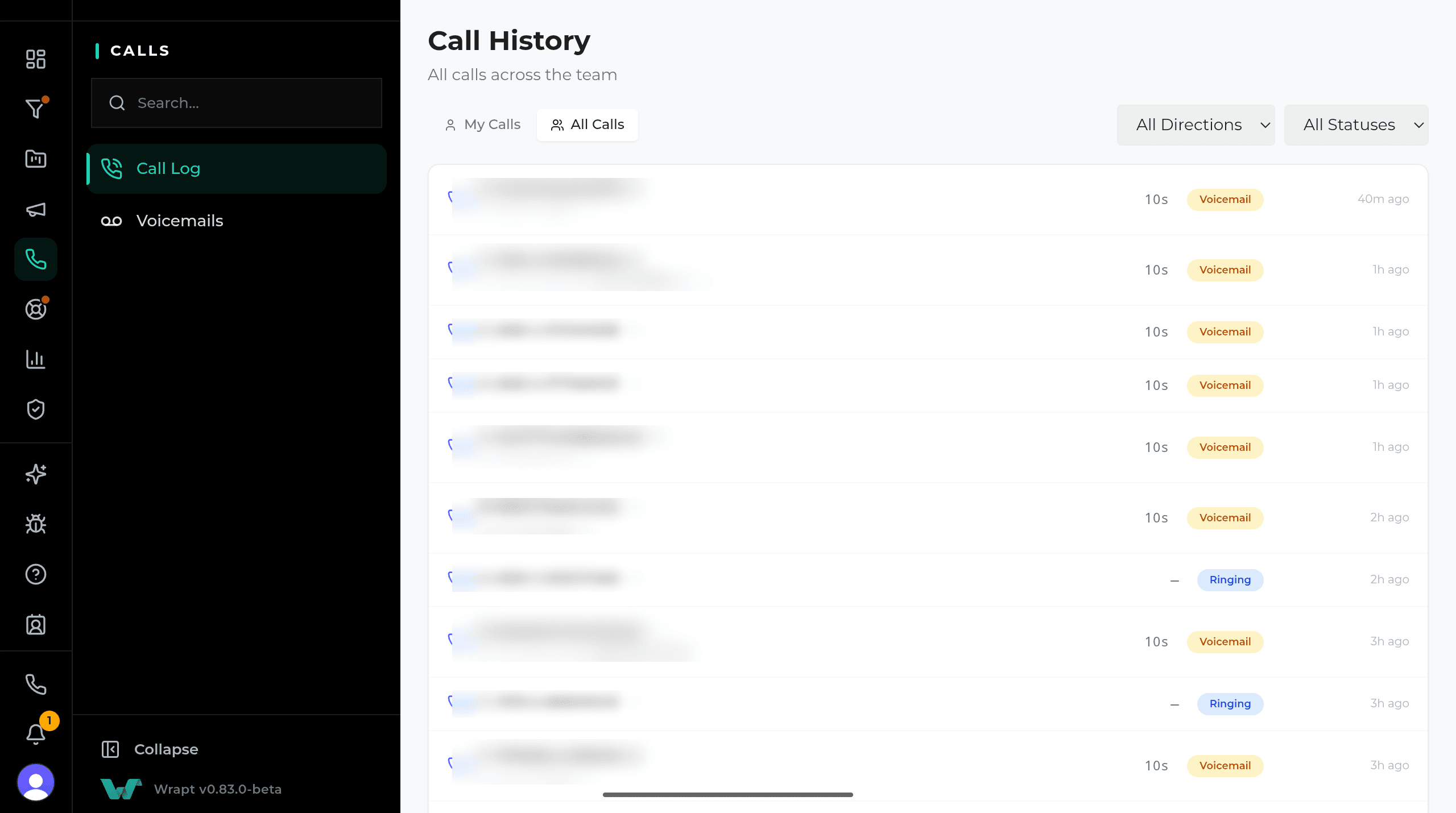
WRAPT's support hub replaced the standalone help desk entirely: email, WhatsApp, SMS, phone/VoIP, Instagram DMs, and a self-service portal, unified for wholesale, B2C, and vendor contacts — with TAMI, a Claude-powered web-chat agent, handling the front line.
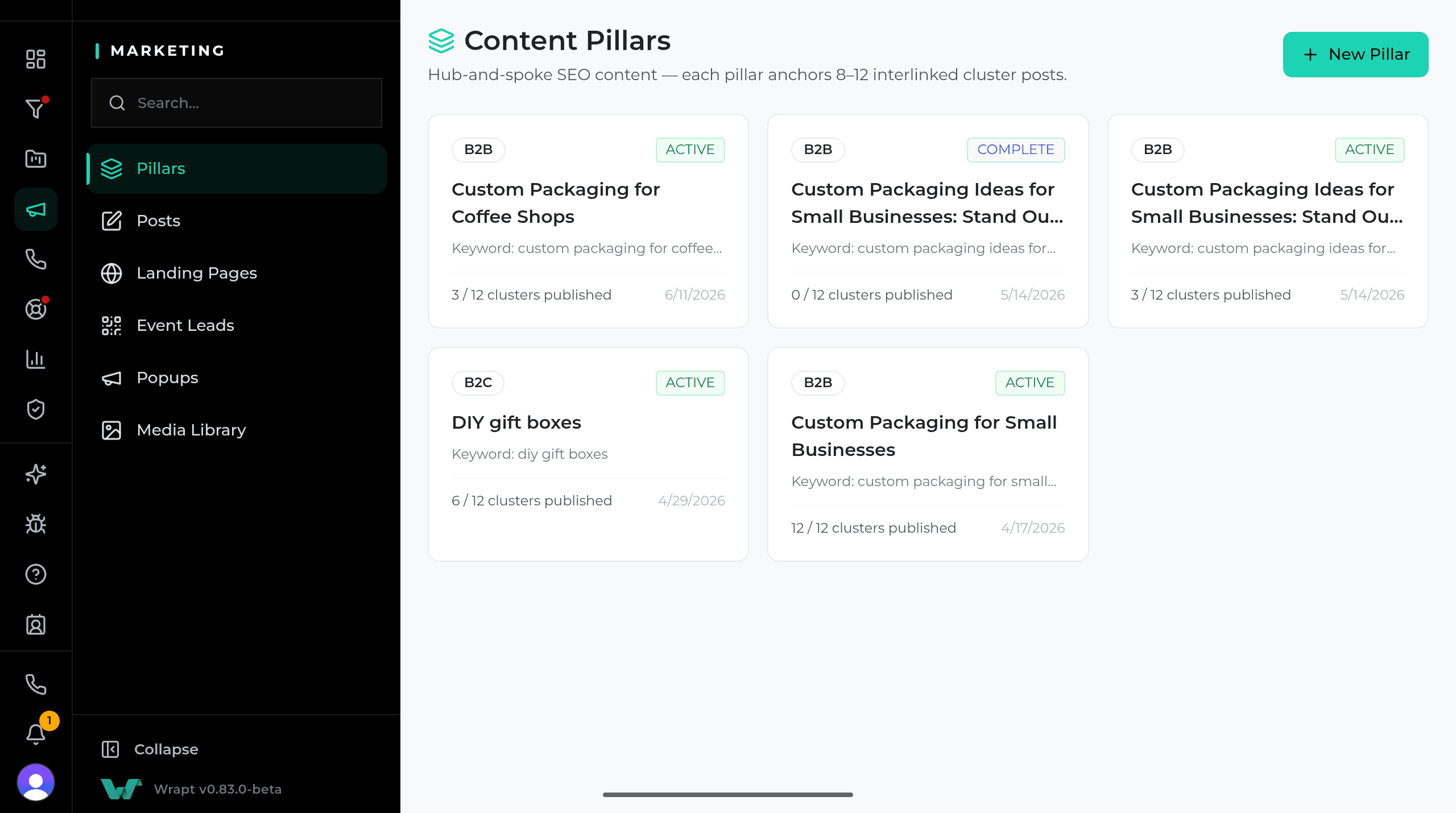
A content engine plus a full lifecycle-email library keep leads warm automatically — wholesale nurture, re-engagement, and re-order flows — so demand generation runs without manual follow-up.
Production-grade tooling — no page builders, no per-seat SaaS lock-in.
The businesses that win don't rent generic software and hope it fits — they own a system built around how they actually operate. WRAPT is the proof: a real company's entire operation, wrapped into one platform it owns. That's what we build for everyone else.
That's exactly the problem we solve. Let's map the system your operation actually needs — and what it costs to own it.
Related: Sand Bar Joe's — Helm booking CRM · Maven — curated networking · vs. commonsku