
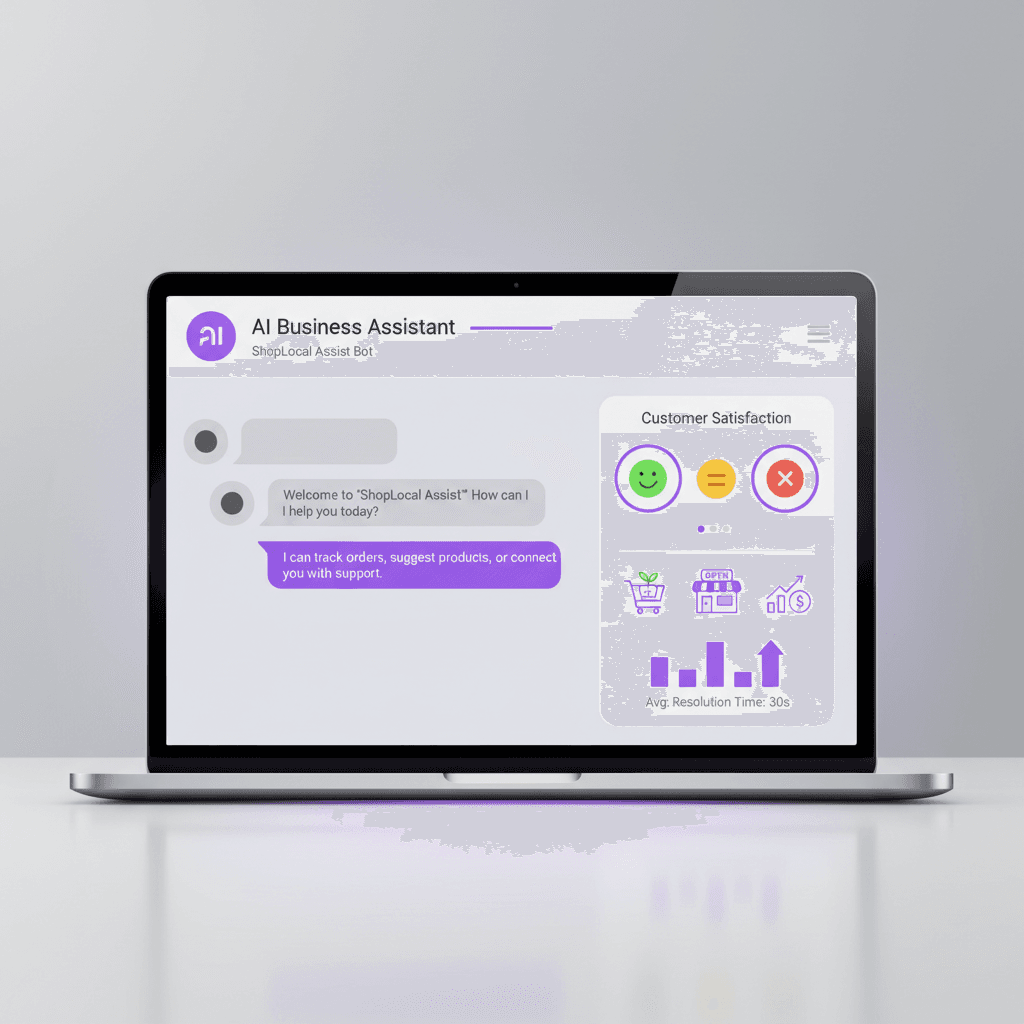
Customer support can make or break a small business. While large corporations can afford massive call centers and expensive helpdesk software, small businesses often struggle to provide the level of customer service their customers expect without breaking the bank.
Enter AI-powered customer support – a game-changing solution that's leveling the playing field. By 2026, AI customer service tools have evolved far beyond simple chatbots, offering sophisticated automation that can handle complex inquiries, learn from interactions, and provide personalized support 24/7.
But here's the catch: most off-the-shelf AI customer support platforms charge hefty monthly fees and come with limitations that don't fit every business model. That's why more small businesses are turning to custom AI solutions that deliver enterprise-level support capabilities at a fraction of the cost.
The Reality of Customer Support for Small Businesses
Small business owners know the customer support struggle all too well. You're pulled between serving customers, managing operations, and growing your business. Meanwhile, customer expectations continue to rise – they want instant responses, personalized service, and round-the-clock availability.
Traditional solutions present significant challenges:
High-cost helpdesk platforms like Zendesk or Freshdesk can cost $50-200+ per agent per month, making them prohibitively expensive for businesses with limited budgets.
Limited availability means you're either tied to your phone after hours or risk losing customers to competitors who respond faster.
Inconsistent service quality happens when you're juggling multiple responsibilities or when different team members handle inquiries differently.
Scalability issues arise during busy periods – you simply can't hire support staff for every peak season or promotional period.
The solution isn't hiring more staff or paying for expensive software subscriptions. It's leveraging AI to automate routine inquiries while ensuring complex issues reach the right human at the right time.
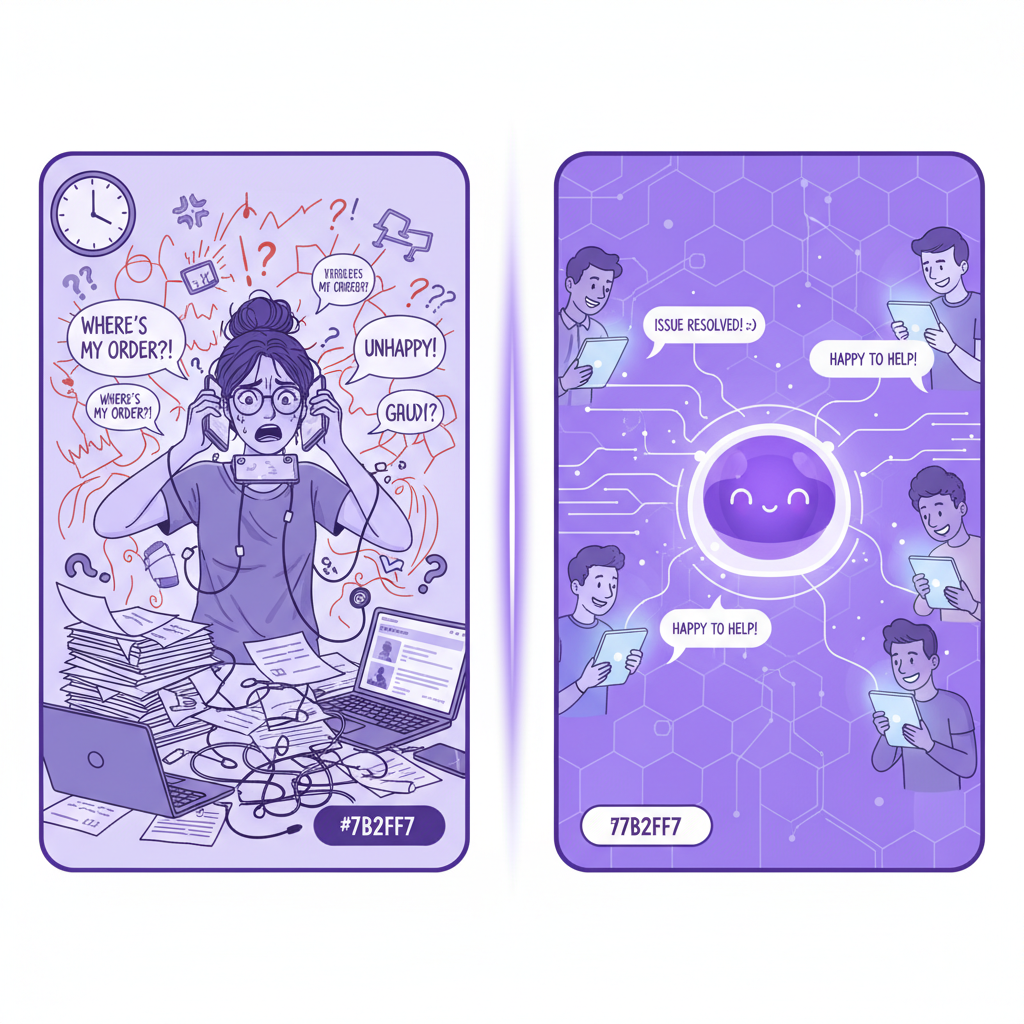
How AI Customer Support Works in 2026
Today's AI customer support systems are sophisticated, context-aware platforms that go far beyond the frustrating chatbots of the past. Here's what modern AI support can handle:
Natural language processing allows AI to understand customer intent, even when inquiries are poorly written or use industry-specific terminology. The system can interpret "My order is messed up" and "There's an issue with my recent purchase" as the same type of inquiry.
Contextual conversations mean the AI remembers previous interactions, understands follow-up questions, and maintains conversation flow naturally. No more starting over every time a customer asks a clarifying question.
Multi-channel integration connects email, live chat, social media messages, and even phone calls through a single AI system that maintains consistent responses across all platforms.
Dynamic learning enables the system to improve over time by analyzing successful resolutions and incorporating new information about your products, services, and common customer issues.
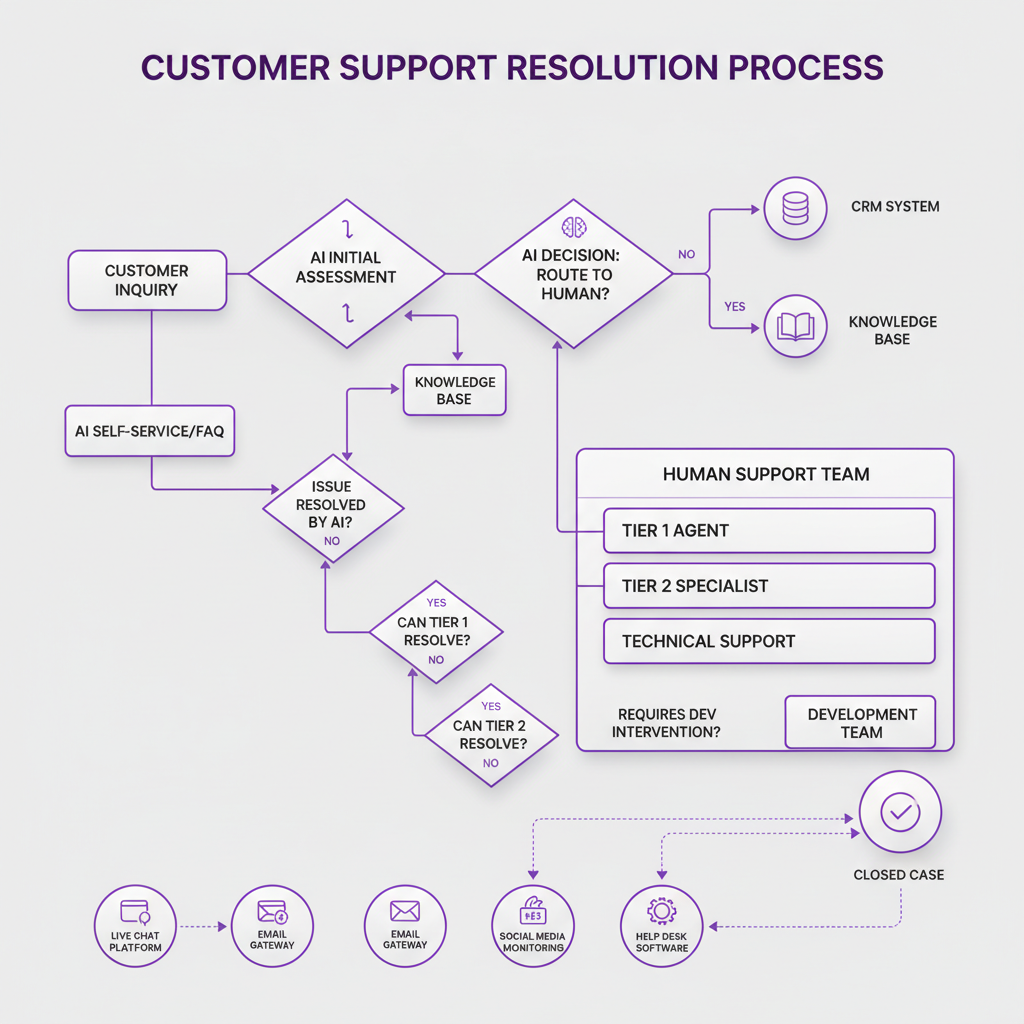
Intelligent routing ensures that when human intervention is needed, the inquiry goes to the right person with full context about the customer's history and current issue.
For restaurants, this might mean automatically handling reservation changes, dietary questions, and menu inquiries while escalating complaints to management. For contractors, the AI could manage appointment scheduling, provide service quotes, and answer common questions about timelines while routing emergency calls directly to the appropriate technician.
The Business Impact of Custom AI Support
The numbers speak for themselves when small businesses implement AI-powered customer support:
Response time improvements are dramatic – from hours or days to seconds for common inquiries. This speed increase directly correlates with customer satisfaction and retention rates.
Cost reduction typically ranges from 40-70% compared to traditional helpdesk software and additional staff. Instead of paying per-agent monthly fees, you own the system and scale without recurring costs.
Availability expansion means true 24/7 support without overtime costs or staff burnout. Your customers get help when they need it, not just during business hours.
Consistency improvements eliminate the variations in service quality that come with different staff members having different knowledge levels or communication styles.
Scalability benefits become apparent during growth periods – your AI support scales instantly without hiring, training, or onboarding delays.
Consider a local dental practice that implemented custom AI support. Before automation, they had one receptionist handling phones, appointments, and walk-ins. Patient calls about insurance questions, appointment availability, and post-procedure care often went to voicemail during busy periods.
After implementing AI automation, their system handles 80% of inquiries automatically – insurance verification, appointment scheduling, prescription refill requests, and common post-treatment questions. The receptionist now focuses on complex cases and in-person patient care, while response times improved from hours to minutes.
Key Features That Matter for Small Businesses
Not all AI customer support systems are created equal. Small businesses need specific capabilities that align with their operational realities:
Easy content management allows non-technical team members to update responses, add new products or services, and modify workflows without developer intervention.
Integration capabilities connect with existing tools – your custom CRM, email marketing platform, scheduling system, and accounting software should work together seamlessly.
Customizable escalation rules ensure urgent issues reach humans immediately while routine requests get handled automatically. You define what constitutes an emergency for your business.
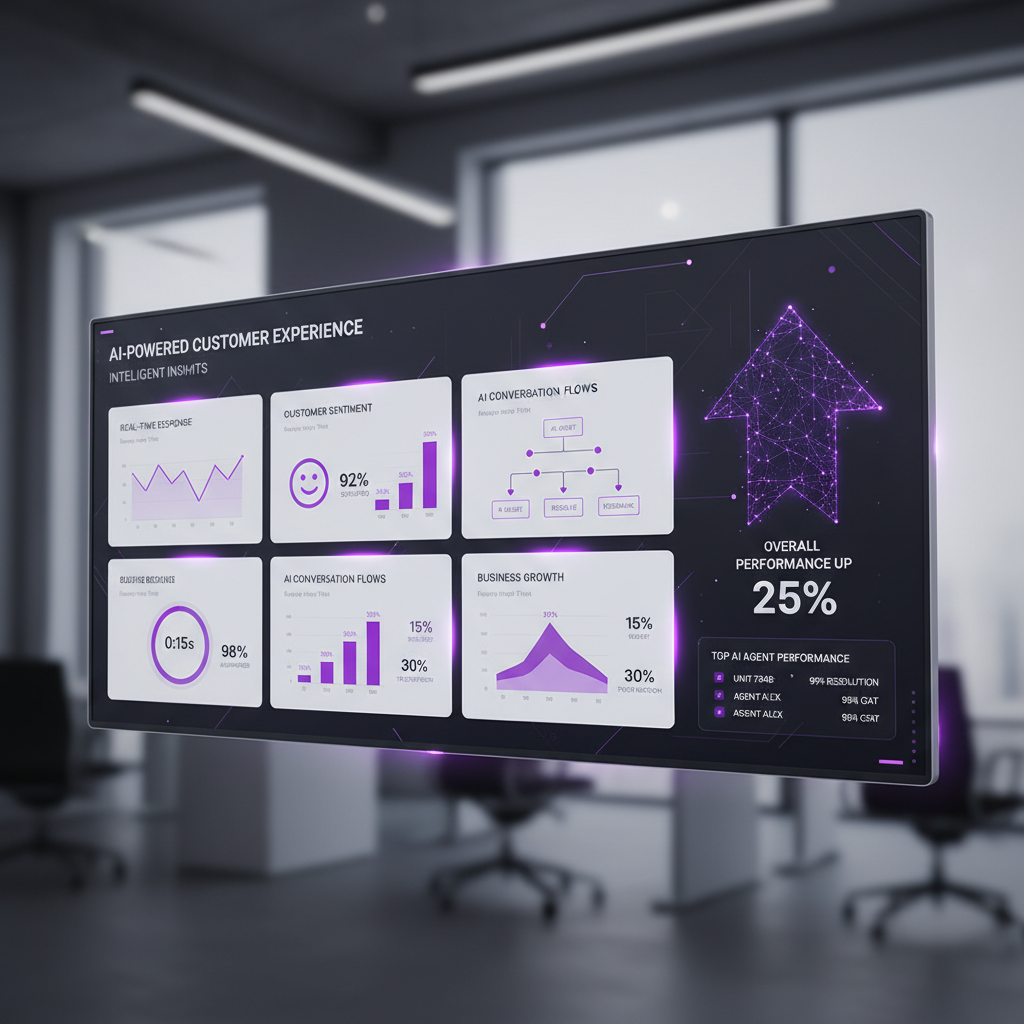
Performance analytics provide insights into customer inquiry patterns, resolution times, satisfaction scores, and areas for improvement without overwhelming complexity.
Multi-language support helps businesses serve diverse customer bases without hiring multilingual staff or paying for premium translation services.
Voice integration allows phone calls to be transcribed, analyzed, and routed appropriately, extending AI benefits beyond text-based channels.
For service-based businesses like salons or law firms, appointment-related inquiries make up 60-80% of customer contacts. Custom AI can handle scheduling, rescheduling, cancellations, and availability questions while integrating with existing booking systems.
Retail businesses benefit from AI that handles order status inquiries, return policy questions, product availability, and basic troubleshooting while connecting to inventory and order management systems.
Custom vs. Off-the-Shelf AI Support Solutions
The choice between custom AI support and subscription-based platforms often comes down to control, cost, and capability alignment.
Subscription platforms like Intercom, Drift, or Zendesk's AI features offer quick setup but come with ongoing monthly costs that increase with usage. Their general-purpose design means you're paying for features you don't need while lacking specific capabilities your business requires.
Custom AI solutions require higher upfront investment but eliminate recurring fees and provide exact functionality matches to your business processes. You own the system, control the data, and modify features as your business evolves.
Cost comparison over three years reveals significant differences. A subscription AI support platform averaging $150/month costs $5,400 over three years, plus setup and integration fees. A custom solution might cost $8,000-15,000 upfront but eliminates ongoing fees and provides more comprehensive functionality.
The break-even point typically occurs between 12-24 months, after which the custom solution provides ongoing value without additional licensing costs. For businesses planning to operate beyond two years, custom solutions offer superior long-term ROI.
Industry-Specific AI Support Applications
Different industries have unique customer support challenges that AI can address through customized approaches:
Restaurants and food service commonly field questions about menus, allergens, hours, reservations, and delivery options. AI can integrate with POS systems to provide real-time availability, process simple orders, and handle reservation modifications while escalating special dietary concerns to staff.
Professional services like legal or accounting firms deal with appointment scheduling, document requests, billing questions, and case status inquiries. AI can access case management systems to provide updates while maintaining confidentiality protocols and escalating sensitive matters appropriately.
Healthcare practices handle appointment scheduling, insurance verification, prescription refills, and basic medical questions. AI can integrate with practice management software while following HIPAA compliance requirements and routing medical concerns to appropriate clinical staff.
Contractors and home services manage appointment scheduling, service area questions, quote requests, and emergency calls. AI can provide automated estimates for common services, check technician availability, and prioritize urgent requests like water leaks or heating failures.
Retail businesses address inventory questions, order status, return policies, and product recommendations. AI can connect to inventory management systems to provide accurate availability information and process routine returns while escalating complex issues.
The key is designing AI workflows that understand your industry's specific terminology, compliance requirements, and customer expectations while integrating with existing business systems.
Implementation Strategy for Small Businesses
Successfully implementing AI customer support requires strategic planning rather than rushed adoption:
Assessment phase involves analyzing current inquiry volumes, categorizing question types, identifying resolution patterns, and mapping integration requirements with existing systems.
Workflow design creates decision trees for common scenarios, establishes escalation triggers, and defines response templates that match your brand voice and expertise level.
Integration planning ensures seamless connection with your custom CRM, scheduling systems, inventory management, and communication platforms.
Testing and refinement starts with limited deployment, monitors performance metrics, gathers customer feedback, and adjusts responses based on real-world usage patterns.
Staff training prepares team members to work alongside AI systems, handle escalated inquiries effectively, and update system knowledge as business offerings change.
Performance monitoring tracks key metrics like resolution rates, customer satisfaction scores, escalation frequency, and response accuracy to ensure continuous improvement.
The implementation timeline typically spans 6-12 weeks from initial assessment to full deployment, depending on integration complexity and customization requirements.
Measuring Success and ROI
Tracking the right metrics ensures your AI customer support investment delivers measurable business value:
Response time reduction should show dramatic improvement – from hours to minutes for common inquiries. Track average response times before and after implementation across all channels.
Resolution rate improvements measure what percentage of inquiries the AI resolves without human intervention. Target 70-85% automation for routine questions while maintaining quality.
Customer satisfaction scores often improve with faster response times and consistent service quality. Monitor ratings and feedback specifically related to support interactions.
Cost per inquiry calculation includes staff time, software costs, and system maintenance. AI typically reduces per-inquiry costs by 50-80% compared to human-only support.
Staff productivity gains occur when team members focus on complex issues, sales opportunities, and strategic work instead of repetitive support tasks.
Scalability metrics measure how inquiry volume increases affect costs and service quality. AI systems maintain consistent performance during peak periods without additional expenses.
Regular performance reviews identify areas for improvement, new automation opportunities, and system optimization possibilities that further enhance ROI over time.
The Future of AI Customer Support
AI customer support technology continues advancing rapidly, with several trends particularly relevant for small businesses:
Voice AI integration is becoming more sophisticated, allowing phone conversations to be handled with the same intelligence as text-based inquiries.
Predictive support analyzes customer behavior patterns to proactively address issues before they become problems, further improving satisfaction and reducing inquiry volume.
Emotional intelligence helps AI systems recognize frustrated or upset customers and adjust responses appropriately or escalate immediately to human agents.
Cross-platform personalization creates consistent experiences whether customers contact you through email, social media, chat, or phone calls.
Advanced analytics provide deeper insights into customer needs, business trends, and optimization opportunities that inform strategic decisions.
Small businesses that implement AI customer support now position themselves ahead of competitors still relying on traditional methods while building scalable systems for future growth.
Getting Started with Custom AI Support
Ready to transform your customer support with AI automation? The path forward starts with understanding your specific needs and exploring custom solutions designed for your business model.
Unlike expensive subscription platforms that lock you into monthly fees and generic features, custom AI support systems provide exactly what your business needs while eliminating ongoing licensing costs.
Whether you're in restaurants, professional services, retail, or any other industry, AI can dramatically improve your customer support capabilities while reducing costs and increasing satisfaction.
The investment pays for itself through reduced staff costs, eliminated software subscriptions, improved customer retention, and the ability to scale support without proportional cost increases.
Don't let another month pass paying for expensive helpdesk software that doesn't fit your needs or struggling with inadequate customer support resources. Contact our team today to discuss how custom AI support can transform your business operations and customer relationships.