
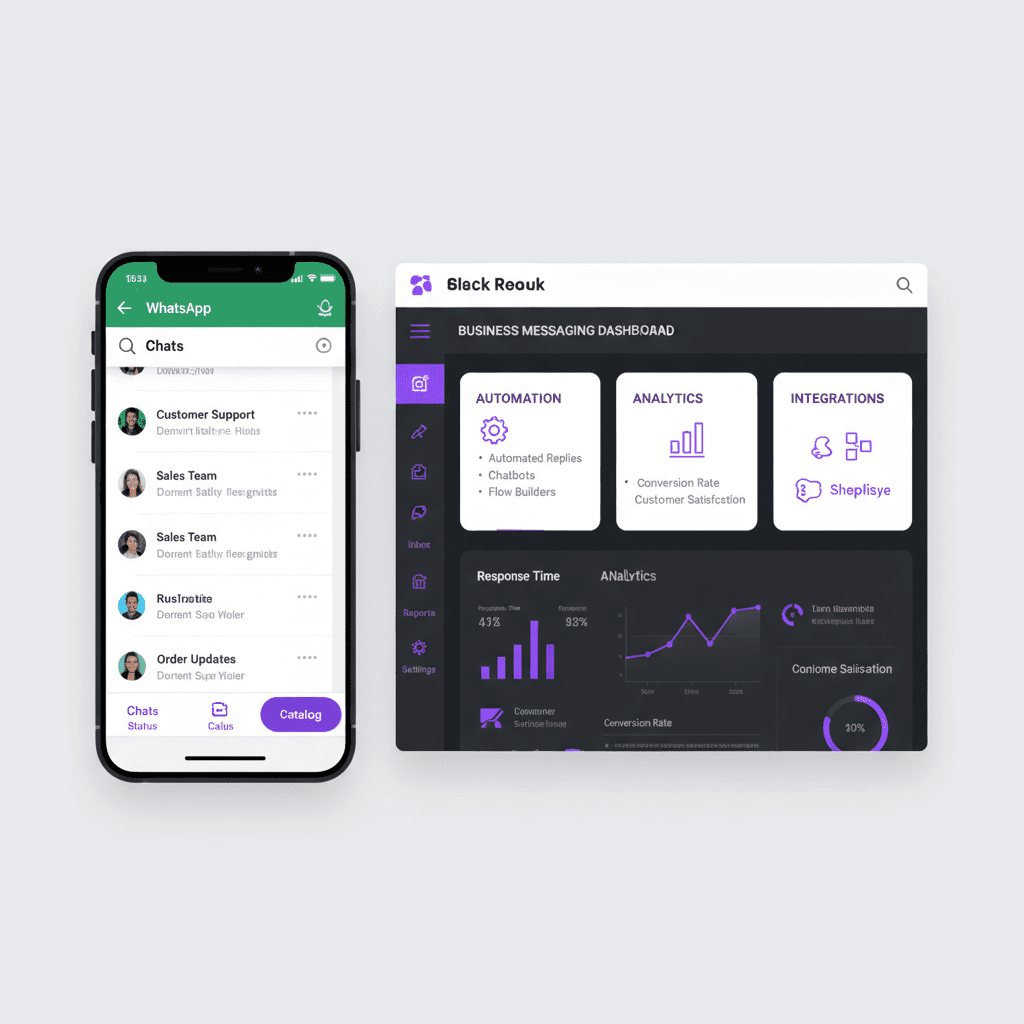
WhatsApp Business seemed like the perfect solution when it launched. Free messaging, billions of users, and the promise of professional business communication. But as small businesses have grown more sophisticated in 2026, many are discovering that WhatsApp Business comes with hidden costs, limitations, and risks that custom messaging platforms solve completely.
If you're running a service-based business, restaurant, or any company that relies heavily on customer communication, you've probably hit the walls of WhatsApp Business. The platform that once felt revolutionary now feels restrictive, especially when you're trying to scale operations or integrate with other business systems.
The Hidden Problems with WhatsApp Business
WhatsApp Business looks appealing on paper, but real-world usage reveals significant limitations that can actually hurt your business growth. Let's examine the specific pain points that are driving businesses away from the platform.
Limited Automation Capabilities
WhatsApp Business automation is surprisingly basic. You get quick replies, away messages, and greeting messages—that's about it. You can't create sophisticated workflows, segment customers based on behavior, or trigger messages based on external events like appointment bookings or order status changes.
For example, a dental practice can't automatically send appointment reminders based on their booking system, follow up with post-treatment care instructions, or segment patients by treatment type. Everything requires manual intervention, which becomes impossible to manage as you scale.
No Real Integration with Business Systems
While WhatsApp Business API exists, it's expensive and still doesn't integrate seamlessly with most small business tools. Your CRM, booking system, inventory management, and payment processing all exist in silos. Customer conversations happen in WhatsApp while all your business logic lives elsewhere.
This disconnect creates data gaps, missed opportunities, and inefficient workflows. When a customer asks about their order status via WhatsApp, your team has to manually check multiple systems instead of having that information automatically available.

Data Ownership and Control Issues
With WhatsApp Business, you don't own your customer communication data. Facebook controls access, can change terms of service, implement new restrictions, or even suspend your account. Many businesses discovered this risk the hard way when Facebook implemented stricter messaging policies in 2023-2024.
Your customer relationships and communication history are essentially held hostage by a platform that prioritizes their business model over yours. This becomes especially problematic for businesses in regulated industries or those handling sensitive customer information.
Scalability and Team Management Limitations
WhatsApp Business wasn't designed for teams. While you can add multiple users, there's no sophisticated role management, conversation assignment, or performance tracking. As your business grows, managing customer communications becomes chaotic.
You can't easily assign conversations to specific team members, track response times, measure customer satisfaction, or maintain consistent service quality across your team. These limitations become critical bottlenecks as you scale.
Why Custom Messaging Platforms Are Taking Over
Smart business owners are recognizing that custom messaging platforms offer capabilities that WhatsApp Business simply can't match. Here's what's driving the migration and why it's accelerating in 2026.
True Integration with Your Business Ecosystem
Custom messaging platforms integrate natively with your existing business systems. When a customer sends a message, your team sees their complete history, current orders, appointment schedule, payment status, and any relevant business context immediately.
For restaurants, this means when a customer texts about their reservation, your staff instantly sees their dining preferences, allergy information, previous visits, and current booking details. For contractors, customer messages automatically display project status, materials ordered, and scheduling information.
This integration extends to automation as well. Your messaging platform can automatically send appointment reminders pulled from your booking system, order updates from your inventory management, or payment reminders from your billing system.
Advanced Automation and AI Capabilities
Custom AI automation in messaging platforms goes far beyond WhatsApp's basic quick replies. You can create sophisticated conversation flows that adapt based on customer behavior, purchase history, and business context.
Modern custom messaging platforms incorporate AI that can understand customer intent, route conversations to appropriate team members, suggest responses based on your business knowledge base, and even handle common inquiries completely automatically.
For example, a law firm's custom messaging platform can automatically qualify potential clients, schedule consultations based on practice area, provide case status updates, and route urgent matters to appropriate attorneys—all while maintaining the personal touch that clients expect.
Complete Data Ownership and Control
With custom messaging platforms, you own all your customer communication data. It's stored in your systems, backed up according to your policies, and accessible for analysis and improvement. You're not dependent on external platform policies or subject to sudden account suspensions.
This ownership becomes crucial for compliance in regulated industries. Healthcare practices, legal firms, and financial services companies need complete control over customer communications to meet regulatory requirements that WhatsApp Business simply can't guarantee.
Professional Branding and Customer Experience
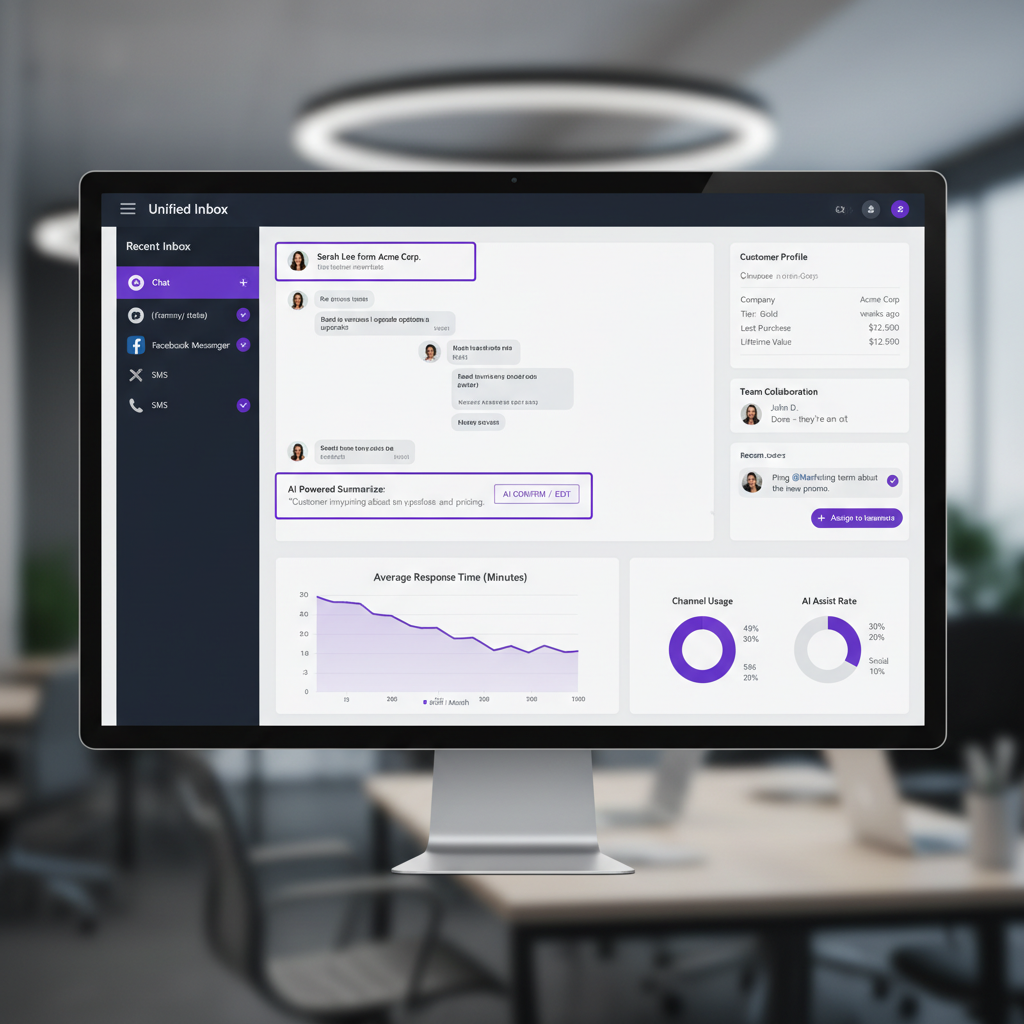
Custom messaging platforms allow complete control over branding and customer experience. Instead of customers interacting with your business through WhatsApp's generic interface, they use a branded platform that reinforces your professional image.
You can customize the interface to match your brand colors, include your logo, and design conversation flows that reflect your business personality. This consistency across all customer touchpoints strengthens brand recognition and trust.
Comprehensive Analytics and Optimization
Custom platforms provide detailed analytics about customer communication patterns, team performance, automation effectiveness, and business impact. You can see which messages drive sales, how quickly your team responds, what topics require the most support, and where conversations typically break down.
This data enables continuous optimization of your customer communication strategy—something impossible with WhatsApp Business's limited analytics.
Industry-Specific Advantages of Custom Messaging
Different industries benefit from custom messaging platforms in unique ways. Understanding these specific advantages helps explain why businesses are making the switch across various sectors.
Restaurants and Food Service
Restaurants using custom messaging platforms can integrate orders, reservations, and customer preferences into every conversation. When customers text about their order, staff immediately see dietary restrictions, previous orders, and delivery preferences.
Custom platforms enable sophisticated automation like sending order confirmations with real-time tracking, automated reservation reminders with menu previews, and personalized promotional messages based on dining history.
Professional Services
Law firms, accounting practices, and consulting businesses benefit from custom messaging platforms that integrate with case management systems, billing platforms, and document storage. Client communications automatically link to relevant files, billing records, and case timelines.
These platforms can automate appointment scheduling, document sharing, invoice notifications, and case status updates while maintaining the professional communication standards these industries require.
Healthcare and Dental Practices
Healthcare providers using custom messaging platforms can integrate with patient management systems, scheduling software, and billing platforms while maintaining HIPAA compliance. Patient communications automatically display medical history, appointment schedules, and treatment plans.
Automation can handle appointment reminders, prescription refill notifications, post-treatment care instructions, and billing inquiries while ensuring all communications meet regulatory requirements.
Technical Considerations for Custom Messaging Platforms
When evaluating custom messaging platforms, several technical factors determine long-term success and ROI. Understanding these considerations helps businesses make informed decisions about their communication infrastructure.
Multi-Channel Communication
Modern custom messaging platforms support SMS, email, web chat, and voice communications from a single interface. This unified approach ensures no customer messages fall through cracks regardless of how customers prefer to communicate.
Unlike WhatsApp Business, which locks you into their platform, custom solutions let customers reach you through their preferred channels while your team manages everything from one dashboard.
Security and Compliance
Custom messaging platforms can be designed to meet specific industry security and compliance requirements. This includes end-to-end encryption, audit trails, data retention policies, and integration with compliance monitoring systems.
For businesses in regulated industries, this compliance capability often justifies the investment alone, as WhatsApp Business can't guarantee regulatory adherence.
Scalability and Performance
Custom platforms scale with your business without platform-imposed limitations. You can add unlimited team members, handle increased message volume, and expand functionality as needed without worrying about hitting platform restrictions or facing unexpected fee increases.
Integration Capabilities
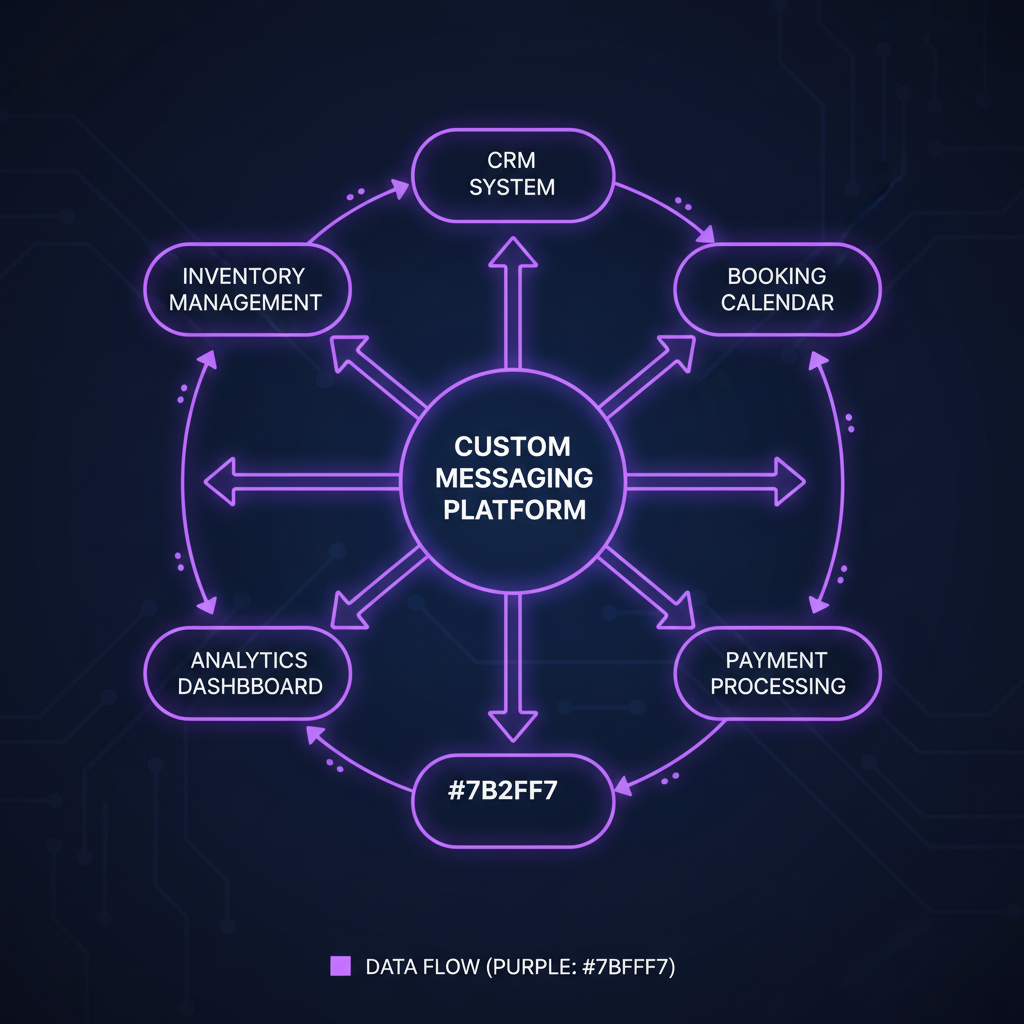
The most powerful advantage of custom messaging platforms is their ability to integrate with your existing business systems. This includes custom CRM systems, booking platforms, inventory management, payment processing, and marketing automation tools.
These integrations create a unified business ecosystem where customer communications enhance and trigger actions across all your business systems.
Making the Transition: What to Expect
Transitioning from WhatsApp Business to a custom messaging platform requires planning, but the process is typically smoother than businesses expect. Here's what the migration process looks like and how to ensure success.
Data Migration and System Integration
The first step involves migrating your existing customer communication data and integrating your new messaging platform with current business systems. Professional development teams can typically complete this integration within 2-4 weeks, depending on system complexity.
Your custom CRM integration ensures that all existing customer data flows seamlessly into your new messaging platform, maintaining conversation history and customer context.
Team Training and Adoption
Custom messaging platforms are designed for ease of use, but team training ensures maximum adoption and effectiveness. Most businesses find that staff prefer custom platforms because they're more efficient and provide better tools for customer service.
Training typically covers conversation management, automation setup, reporting features, and integration with existing workflows. The improved efficiency usually becomes apparent within the first week of use.
Customer Communication During Transition
Professional migration strategies ensure customers experience no disruption during the platform transition. You can run both systems simultaneously during the migration period, gradually moving conversations to the new platform.
Many businesses use the transition as an opportunity to upgrade their customer communication experience, highlighting new features and improved service capabilities.
Measuring Success and ROI
Custom messaging platforms provide detailed analytics that make ROI measurement straightforward. Most businesses see improvements in response times, customer satisfaction, and team efficiency within the first month.
Long-term benefits include reduced software costs (eliminating multiple communication tools), improved customer retention, increased sales through better communication, and enhanced team productivity.
Cost Considerations and ROI
While custom messaging platforms require upfront investment, the total cost of ownership often proves lower than combining WhatsApp Business with the additional tools needed to achieve similar functionality.
Hidden Costs of WhatsApp Business
WhatsApp Business API costs $0.005-$0.05 per message, which adds up quickly for active businesses. Additionally, you still need separate tools for team management, analytics, automation, and system integration. These combined costs often exceed custom platform investment.
Custom Platform Investment
Custom messaging platforms typically involve development costs ranging from $15,000-$40,000 depending on complexity and integrations. However, this one-time investment eliminates ongoing per-message fees and subscription costs for multiple tools.
Long-term ROI
Most businesses achieve ROI within 12-18 months through improved efficiency, reduced software costs, and enhanced customer experience leading to increased sales and retention.
Conclusion
The limitations of WhatsApp Business become more apparent as businesses grow and customer communication becomes more critical to success. Custom messaging platforms offer the integration, automation, control, and scalability that growing businesses need.
While WhatsApp Business serves as a starting point for business messaging, companies serious about customer communication and operational efficiency are discovering that custom solutions provide capabilities that simply aren't possible with generic platforms.
The businesses making this transition in 2026 are positioning themselves for more efficient operations, better customer experiences, and sustainable growth through communication systems designed specifically for their needs.
Ready to explore how a custom messaging platform could transform your customer communications? Contact our team to discuss your specific requirements and see how custom solutions can eliminate the limitations holding your business back.