
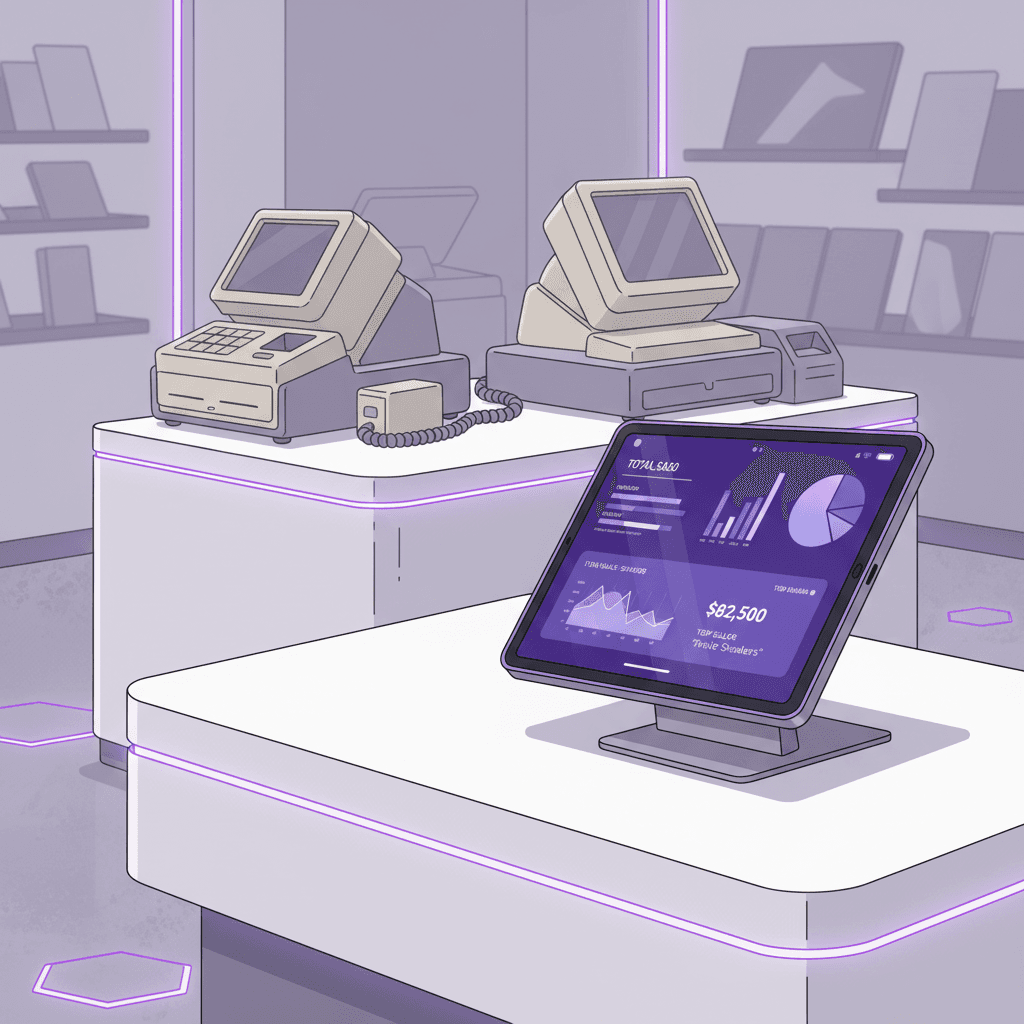
Traditional point-of-sale (POS) systems are becoming the dinosaurs of small business technology. While giants like Square, Toast, and Shopify continue to dominate the market with their one-size-fits-all solutions, savvy business owners are discovering a better path: custom POS systems built specifically for their unique needs.
The shift isn't just about cutting costs—though savings of 40-60% are common. It's about finally having a system that works the way your business actually operates, rather than forcing your business to conform to rigid software limitations.
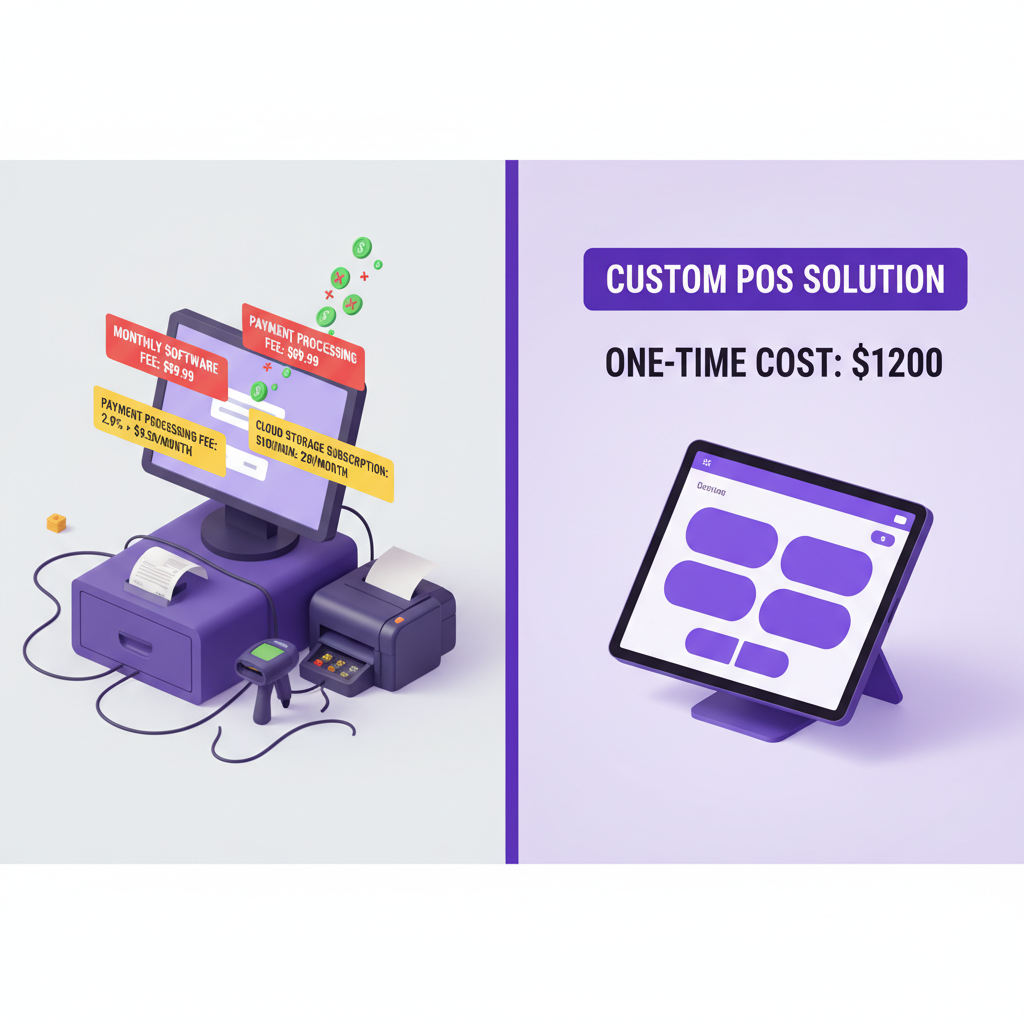
The Hidden Costs of Traditional POS Systems
Most small business owners focus on the monthly subscription fee when evaluating POS systems, but that's just the tip of the iceberg. The true cost of traditional POS systems includes layers of fees that can quickly spiral out of control.
Transaction Fees That Never Stop Square charges 2.6% + 10¢ for every in-person transaction, while Toast can charge up to 2.49% + 15¢. For a restaurant processing $50,000 monthly, that's $1,300 in transaction fees alone—every single month. Over five years, you're looking at $78,000 just in processing costs.
Monthly Subscription Creep What starts as a $60/month basic plan quickly becomes $200+ as you add essential features:
- Advanced reporting: +$50/month
- Inventory management: +$40/month
- Employee scheduling: +$30/month
- Customer loyalty program: +$25/month
- Multi-location support: +$35/month
Hardware Lock-In Traditional POS providers often require expensive proprietary hardware. Toast's handheld devices cost $799 each, while their kitchen display systems run $1,680. Need to expand? You're buying their hardware at their prices.
Integration Limitations Want to connect your POS to your existing accounting software? That's another monthly fee. Need custom reporting for your franchise requirements? Sorry, not available. The rigidity of traditional systems forces businesses to either adapt their processes or pay for expensive workarounds.
Why Custom POS Systems Are Gaining Traction
The custom software revolution isn't just hitting CRMs and marketing tools—POS systems are experiencing the same transformation. Small businesses are realizing they can get exactly what they need without the bloat, restrictions, and endless fees.
Built for Your Industry A custom POS for a busy pizza restaurant looks nothing like one designed for a boutique clothing store. Traditional systems try to serve everyone and end up serving no one perfectly. Custom systems are built around your specific workflow, menu structure, inventory needs, and customer interaction patterns.
For restaurants, this might mean a kitchen display system that automatically adjusts cook times based on historical data, or integration with your existing reservation system. For retail, it could be advanced inventory tracking that accounts for seasonal variations and automatic reordering based on your specific supplier relationships.
No Transaction Fees This is the game-changer for high-volume businesses. A custom POS system processes payments through your chosen payment processor at standard rates (typically 2.9% for online, 2.6% for in-person), without the additional markup that traditional POS companies layer on top.
True Ownership With a custom system, you own the software. No monthly fees, no feature gates, no sudden price increases. You can modify it, expand it, or integrate it with any other system you choose. Traditional POS systems hold your data and functionality hostage—custom systems give you complete control.
Scalability Without Penalties Growing your business shouldn't mean exponentially growing your software costs. Custom POS systems scale with your business without per-location fees, per-user charges, or feature restrictions. Add ten locations? Your software costs stay the same.
Real-World Success Stories
Maria's Taqueria Chain Maria was paying Toast $340/month per location across her four restaurants, plus 2.49% transaction fees on $180,000 monthly revenue—that's $4,482 in processing fees alone. After switching to a custom POS system built by iOLab Digital, she eliminated the monthly fees entirely and reduced processing costs to standard rates, saving over $60,000 annually.
The custom system includes features Toast couldn't provide: integration with her family recipes database, automatic Spanish-English menu translations, and custom reporting that meets her franchise partner's specific requirements.
Thompson's Auto Parts This three-location auto parts chain needed inventory management that could track part compatibility across thousands of vehicle makes and models. Traditional POS systems offered basic inventory tracking, but nothing sophisticated enough for their needs. Their custom system includes:
- Real-time inventory across all locations
- Vehicle compatibility matching
- Automatic reordering based on seasonal patterns
- Integration with supplier catalogs and pricing
The result? Inventory accuracy improved from 78% to 97%, reducing lost sales and overstock situations.
The Technical Reality of Custom POS Development
Building a custom POS system isn't as complex or expensive as most business owners assume. Modern development frameworks and cloud infrastructure have dramatically reduced both development time and ongoing costs.
Core Components Every POS system needs the same basic elements:
- Transaction processing interface
- Inventory management
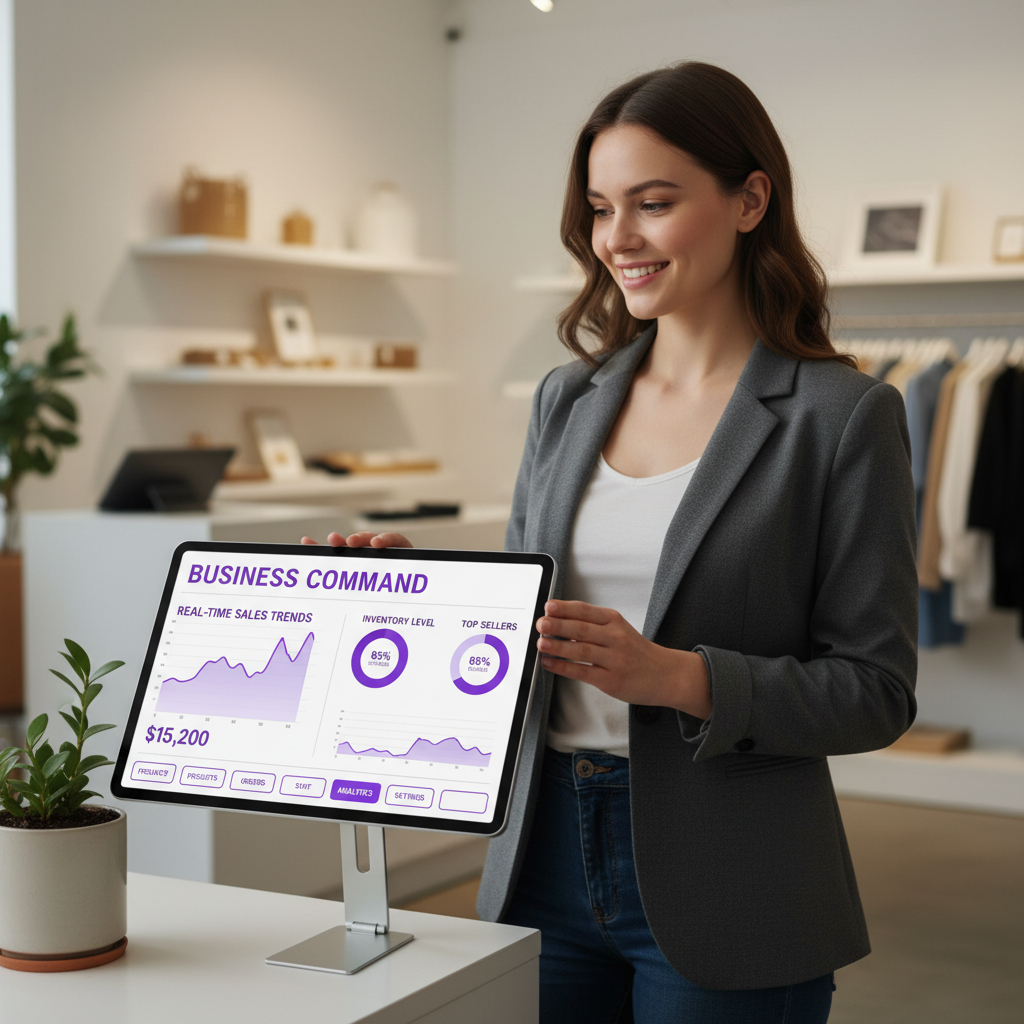
- Sales reporting and analytics
- Employee management and permissions
- Integration with payment processors
- Receipt and invoice generation
- Customer management
The difference is in how these components are designed and connected. A custom solution builds these elements around your specific business processes, while traditional systems force you to adapt to their predetermined workflow.
Development Timeline Most custom POS systems can be built in 3-6 months, depending on complexity. This includes:
- 2-4 weeks: Requirements gathering and system design
- 6-12 weeks: Core development and testing
- 2-4 weeks: Integration with payment processors and existing systems
- 2-3 weeks: Staff training and system optimization
Ongoing Maintenance Unlike traditional SaaS solutions that require monthly payments forever, custom systems need minimal ongoing maintenance. Typical costs include:
- Server hosting: $50-200/month depending on transaction volume
- SSL certificates and security updates: $200-500/year
- Payment processor fees: Standard industry rates (2.6-2.9%)
- Optional feature additions: As needed
Integration Capabilities That Traditional Systems Can't Match
One of the biggest advantages of custom POS systems is their ability to integrate seamlessly with your existing business tools. Traditional POS providers limit integrations to their approved partners—usually for an additional monthly fee.
Accounting Integration Your custom POS can integrate directly with QuickBooks, Xero, or any accounting system you prefer. Sales data, tax information, and inventory costs sync automatically without additional software or manual data entry.
Customer Relationship Management Integration with your custom CRM creates a complete picture of customer behavior. Track purchase history, preferences, and communication across all touchpoints. This level of integration is impossible with traditional POS systems that guard their data jealously.
Marketing Automation Connect your POS directly to your email marketing system to trigger personalized campaigns based on purchase behavior. Send automatic thank-you emails, reorder reminders, or birthday offers without any manual intervention.
Mobile Apps For restaurants and retail businesses, a custom mobile app that integrates with your POS can provide features like mobile ordering, loyalty tracking, and appointment scheduling—all feeding into the same system your staff uses daily.
Industry-Specific Advantages
Different industries have unique POS requirements that traditional systems simply can't address effectively.
Restaurants Traditional restaurant POS systems are notoriously inflexible. A custom system for restaurants can include:
- Kitchen display systems optimized for your specific layout
- Integration with existing reservation and delivery systems
- Custom menu management that handles complex modifications
- Staff scheduling based on historical sales patterns
- Real-time food cost calculations
Retail Retail businesses need inventory management that goes far beyond what traditional POS systems provide:
- Multi-channel inventory tracking (online, in-store, warehouse)
- Seasonal demand forecasting
- Supplier integration for automatic reordering
- Custom reporting for franchise or multi-location requirements
Service Industries For salons, spas, and service businesses, traditional POS systems are often overkill. A custom solution might include:
- Appointment scheduling integrated with payment processing
- Service history and customer preferences
- Commission tracking for staff
- Inventory management for retail products

Making the Switch: What to Expect
Transitioning from a traditional POS system to a custom solution requires planning, but the process is more straightforward than most business owners expect.
Data Migration Your existing sales data, customer information, and inventory records can be migrated to your new custom system. This includes:
- Historical sales data for reporting and trend analysis
- Customer contact information and purchase history
- Current inventory levels and product information
- Employee records and access permissions
Staff Training Because custom systems are designed around your existing workflow, staff training is typically faster and easier than learning a new traditional POS system. Most teams are fully productive within 1-2 weeks.
Hardware Transition Custom POS systems can often utilize existing hardware or run on standard tablets and computers, reducing transition costs. You're not locked into proprietary hardware that becomes obsolete when you want to change systems.
Gradual Rollout For multi-location businesses, custom systems can be rolled out gradually, allowing you to test and refine the system at one location before expanding to others.
The ROI of Going Custom
The financial benefits of switching to a custom POS system compound over time. Here's how the numbers typically work out:
Year 1: Development costs ($15,000-40,000) plus elimination of monthly fees and reduced transaction costs usually result in break-even by month 8-12.
Year 2-5: Pure savings. No monthly fees, standard processing rates, and the ability to add features without additional subscription costs.
Year 5+: While traditional POS users have paid potentially $100,000+ in fees, custom system owners have only paid for hosting and standard processing—typically saving $50,000-150,000 over five years.
Getting Started with Custom POS Development
If you're spending more than $200/month on your current POS system, or if you find yourself constantly frustrated by limitations and restrictions, it's time to explore custom alternatives.
The first step is understanding your specific requirements and calculating your current total cost of ownership. Many business owners are shocked to discover they're paying 2-3x more than necessary for features they don't need, while missing functionality that would significantly improve their operations.
AI automation can enhance your custom POS with features like predictive inventory management, customer behavior analysis, and automated marketing triggers—capabilities that traditional systems simply can't provide at any price.
Take Control of Your Business Technology
Traditional POS systems served their purpose when custom software was expensive and time-consuming to develop. Those days are over. Modern development practices and cloud infrastructure make custom solutions faster to build, easier to maintain, and dramatically more cost-effective than ongoing SaaS subscriptions.
Your business is unique. Your POS system should be too.
Ready to explore how a custom POS system could transform your business operations and slash your technology costs? Contact our team for a free consultation and cost analysis of your current system.